
The Best No-Fee Cash Back Credit Cards in Canada 2026

If you’re not using the best free cashback credit cards in Canada, then you’re missing out on free money!
We published our no-fee cashback credit card list back in 2007 and we’ve been updating it regularly ever since, so you always know which no-fee cashback cards to consider.
We start our list with a quick chart comparing Canada’s best free cashback credit cards for easy reference. Then we follow up with some mini reviews so you get the full picture of what each card has to offer. We also include plenty of links to full reviews and other lists, so you know where to go if you want more information.
Consider this your gateway to earning fantastic cashback rewards…without paying a cent in annual fees!
Best No-Fee Cashback Credit Cards in Canada: Quick Comparison

 5 / 5
5 / 5None
Up to 6% from partner stores
 4.4 / 5
$60,000 (World Mastercard) or none (Money-back Credit Card)
2% on up to 3 spending categories, 0.5% base rate
4.1 / 5$15,000
3% on groceries, 1% on recurring bill payments, 0.5% base rate
 3.7 / 5
$80,000
3% on $US purchases, 1.5% base rate
 3.2 / 5
$15,000
2% on groceries, 1% base rate
None
 3.1 / 5
Some anual income required
3% on groceries, 1% on recurring bill payments, 0.5% base rate
This time around, we reassessed all our picks from previous years and added in the best of what’s new. Earn rates are always front of mind when it comes to cashback cards, but we also considered the primary cashback earn categories and what perks (if any) the cards offer.
If you don’t mind paying an annual fee, you could consider a card from our list of the Best Premium Cashback Credit Cards in Canada – the perks are often better, but you need to consider whether your cashback earnings will cover the cost of the card.
Best Overall No-fee Cash back Credit Card: Neo Financial
Our pick for the best free cash back credit card in Canada is the Neo Mastercard. A digital financial company based in Calgary, Neo has put together a user-friendly card with first-class flexibility and fantastic earn rates.
While the no-fee Neo Card has a good base cashback rate, its shining feature is the enhanced earn rates from a growing list of Neo partners. Neo Financial Mastercard holders earn an average of 5% cash back from retailers including:
- Walmart
- Amazon
- Coles
- Netflix
- Uber & Uber Eats
- Irving and other gas stations
- Loblaws grocery stores
- Canadian Tire
For more details about Neo Financial’s credit card, head to our Neo Financial Credit Card Review.
Income required: None
Welcome bonus: New Neo Financial cardholders receive up to 15% cashback on their first purchases from partner stores. On top of that, all new users enjoy a free $25 sign up bonus.
Earn rate:
Earn 5% cashback at Neo partners
Additional perks/benefits: None
We love: The huge cashback bonuses for first-time purchases, and the fantastic Neo app. Neo is also currently ranked 1st on our best credit cards in Canada list.
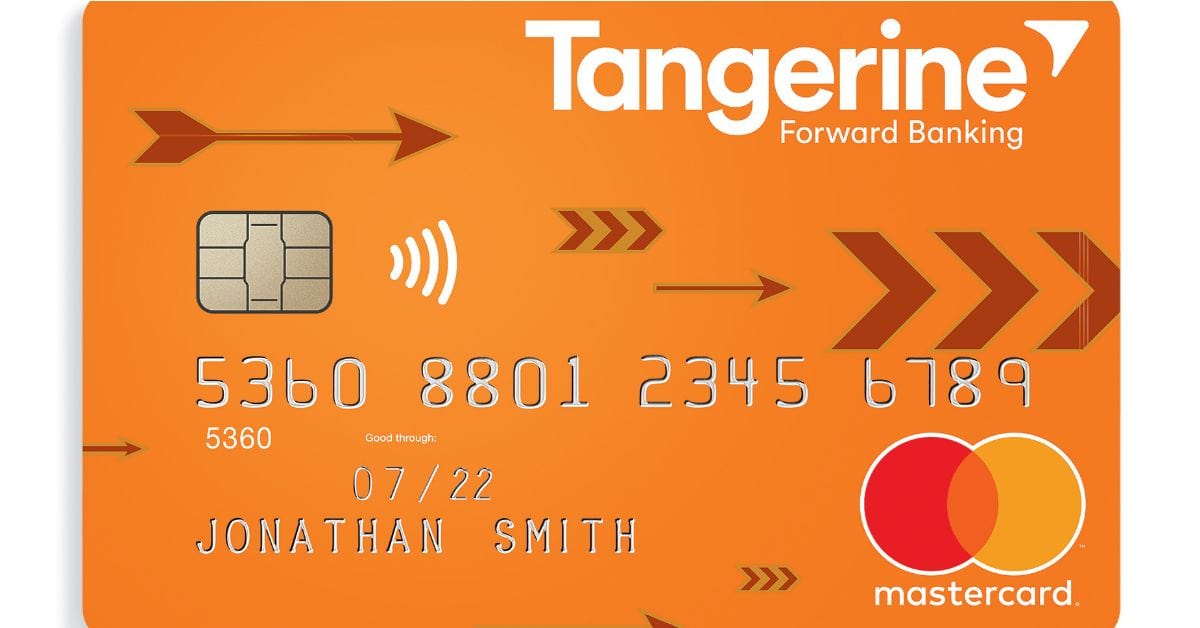
Best No-Fee Cashback Credit Card with Flexible Spending Categories: Tangerine World Mastercard and Money-back Credit Card
An online-only subsidiary of Scotiabank, Tangerine specializes in no-fee banking and credit cards. Tangerine offers 2 free credit cards with the same basic cashback features – which is why they share this spot on our list.
Tangerine gives you 2% cashback on 2 categories of your choice (3 if you open a bank account). It also gives you an extra 10% cash back on the first $1,500 spent on your card – one of the most generous welcome bonuses on this list!
The Tangerine World Mastercard offers more perks but comes with a higher required minimum income. The Tangerine Money-back card doesn’t have all the bells and whistles, but it gives cardholders with a lower income (as low as $15,000/year) access to identical cashback earnings.
You can find full details at our Tangerine World Mastercard Review and our Tangerine Money-Back Credit Card review.
Income required:
$15,000 household (Money-Back Credit Card)
$60,000 personal, $100,000 household (Tangerine World Mastercard)
Welcome bonus: 10% cashback for the first $1,500 spent in the first 2 months (up to $120 cashback) if you apply by November 30, 2026.
Earn rate:
2% cashback on 2 or 3 categories of your choice
0.5% cashback on everything else
Additional perks/benefits:
Both cards:
- 90-day purchase assurance
- Up to 1-year extended warranty coverage
Tangerine World Mastercard only:
- Rental car insurance
- $1,000 mobile device insurance
- Mastercard Travel Pass provided by DragonPass (lounge visit fees extra)
We love: The ability to pick our categories, plus that wonderful welcome bonus
Best No-Fee Cashback Credit Card for Groceries: BMO Cashback Mastercard
The no-fee BMO Cashback Mastercard
earns its spot on our list with a special cashback boost for groceries. Cardholders receive 3% cashback on up to $500 in grocery purchases each month. BMO also offers 1% cashback on recurring bill payments, up to a $500 spend.
One more thing we love about this card is their welcome bonus: 5% cashback for the first 3 months. That’s a fantastic rate, even though there are category-specific spending caps!
New cardholders also receive a balance transfer rate of 0.99% for 9 months (plus a 2% balance transfer fee) – enough for us to feature this card on our list of the Best Balance Transfer Credit Cards.
Minimum Income: $15,000 personal
Interest Rate: 20.99% on purchases, 22.99% on cash advances (or 21.99% for Quebec residents)
Welcome Bonus:
0.99% introductory rate on balance transfers for 9 months with a 2% transfer fee
5% cashback for the first 3 months (maximum spend of $2,500 split between specific categories, e.g., 500 on groceries. Max $125 cashback)
Earn rate:
3% cashback on groceries (capped at $500/month spend)
1% cashback on recurring bill payments (capped at $500/month spend)
0.5% unlimited cashback on all other purchases
Travel Insurance: None
Perks:
- Extended warranty
- Purchase protection
- Up to 25% off rentals at participating National Car Rental and Alamo Rent a Car locations
- 15% off Cirque du Soleil touring shows in Canada and 20% off resident shows in Vegas
We love: Extra cashback on groceries and that sweet, sweet welcome bonus
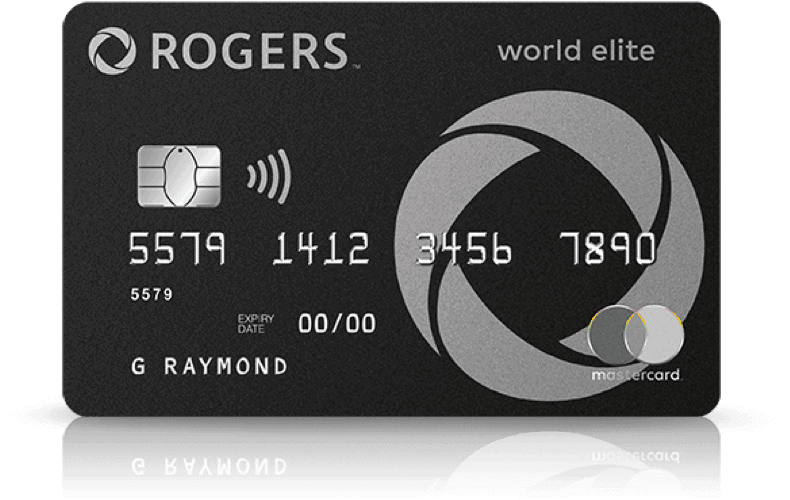
Best No-fee Cashback Credit Card for Travel: Rogers World Elite Mastercard
The Rogers World Elite Mastercard is our top recommended cashback card for cross-border travellers. It offers high regular earn rates and bonus earning for US dollar purchases. It also offers a suite of travel insurance, which is rare in free credit cards.
Rogers was one of our top picks back in 2019, and while they still deserve a spot on our list, the fact is that they’re not financially accessible for everyone. The Rogers World Elite Mastercard has the highest required minimum income of any cards on this list, at $80,000 personal ($150,000 household). You’re also required to spend at least $15,000/year to maintain the account.
We love the card, and if you’re eligible, we recommend it, especially if you shop Stateside a lot. But our editorial team agreed that our top spot should go to a card with lower financial requirements.
If you don’t qualify and still want a travel credit card, never fear, you can find great options for a range of fees in our list of the Best Travel Credit Cards in Canada.
Income Required: $80,000 (and a minimum spend of $15,000 annually)
Welcome Bonus: $25 cashback with first purchase within 3 months of receiving the card
Earn Rate:
1.5% cashback on all purchases
3% cashback on US dollar purchases
Additional Perks/Benefits:
- Access to over 1,300 airport lounges worldwide with Mastercard Travel Pass provided by DragonPass
- Extended Warranty and Purchase Protection
- Rental Car Collision/Damage Insurance
- Out-of-Province/Out-of-Country Emergency Medical Insurance
- Trip Interruption Insurance
- Trip Cancellation Insurance
We love: Premium perks for no annual fee, the 1.5% base earn rate.
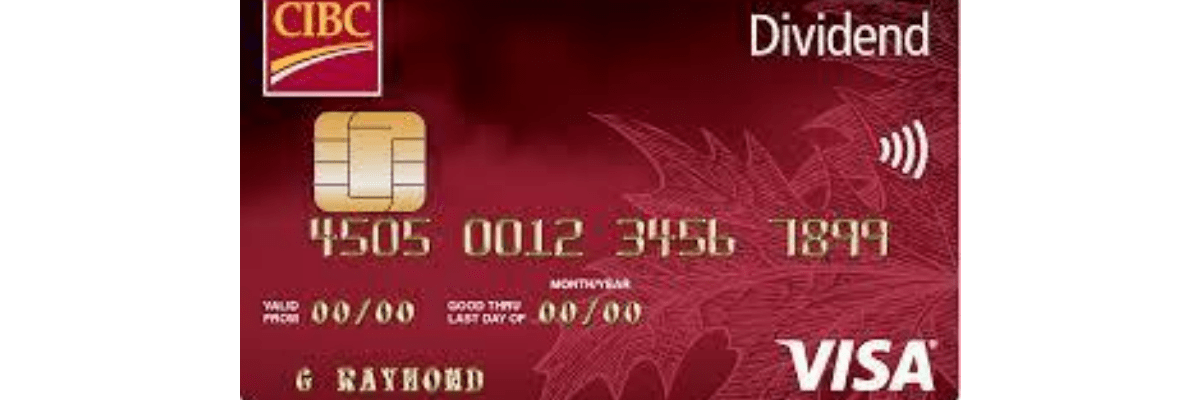
Best No-Fee Cashback Visa: CIBC Dividend Visa
As we compiled this list, we couldn’t help but notice that it was heavy on the Mastercards. We like to think we’re equal-opportunity credit card lovers here! So, we sorted through the Visas and made a special category just for them.
The CIBC Dividend Visa offers 2% cashback on groceries up to $20,000 in annual purchases (which is a lot of frozen pizza, just saying). They offer 1% cashback on multiple high-use categories and a standard base rate of 0.5% on everything else.
While this Visa doesn’t have a welcome bonus at the moment, they do have a low minimum income, which we like to see in a free cashback card. They also offer travel accident insurance, which doesn’t feature on most no-fee cards, and especially not ones with such minimal eligibility requirements.
Income Required: $15,000 household
Welcome Bonus: None
Earn Rate:
2% cashback on groceries
1% cashback on gas, transportation, dining, and recurring payments
0.5% unlimited cashback on all other purchases
Additional Perks/Benefits:
- Purchase security
- Extended Protection Insurance
- $100,000 Common Carrier Accident Insurance
We love: The earn rate on groceries and the travel insurance.
Best No-Fee Cashback Credit Card for Students: BMO Cashback Mastercard for Students
Canada’s top cashback card for students is the BMO Cashback Mastercard for Students. This no-fee cashback card gives you the same great cashback earn rates as the regular BMO Cashback Mastercard, but doesn’t require specific minimum income (you just need some income).
It not only has a great earn rate, but it also has an excellent welcome bonus. You can read more about this card, and our other favourite student credit cards, on our list of the Best Student Credit Cards in Canada.
Income required: None
Welcome bonus:
5% cashback in your first 3 months (up to $125 total)
Earn rate
3% cashback on grocery purchases
1% cashback on recurring bill payments
0.5% cashback on everything else
Additional perks/benefits:
- Purchase assurance
- Extended warranty benefits
- Discounts on car rentals and Cirque du Soleil tickets
We love: The accessibility for lower income students, the earn rate, and the welcome bonus.
Canadian No-Fee Cashback Credit Cards: FAQ
The Best No-Fee Cashback Credit Card in Canada: Our Verdict
Our pick for the best free cashback credit card in Canada is the Neo Financial Mastercard!
Their earn rates, welcome bonus, and fantastic app make them clear winners for us.
Some people may prefer the flexibility of bonus cash back on whole spending categories instead of specific stores, and if that’s you, Tangerine’s cards are a great second choice. But we found that Neo’s growing list of partners was big enough to keep us happily earning great cashback without missing category-based rewards.
Keep in mind that you don’t have to pick just one! No-fee cards are easy to stack. You can use the Neo Financial Mastercard for store-specific purchases and keep the Tangerine Money-back Credit Card (or their World Mastercard) for shopping in 2 or 3 categories of your choice.
Stacking credit cards is an art form in itself, and we have a whole post about Multiple Credit Card Strategies for Canadians if you’re interested in learning more.
If you play your cards right (pun intended), you can earn major cashback rewards and still pay exactly zero dollars in fees.









I found the discussion on this very helpful over the years, and have posted a few times over the years here myself..
Once again the CC companies seem to be watering down their cash back rewards. My fav go to “MBNA Rewards World Elite” card has joined this club as well. Any suggestions for the best deal for July 2021?
I see the American Express card seems to be what I prefer in reward structure, 2 different cards that give you rewards regardless of what you buy. However a lot of places won’t take American express or tack on a premium to your bill, because they charge retailers a very high transaction % fee. So you may not really be getting the reward you are hoping for. In turn, not my first choice…
Suggestions?
How does the “Home Trust Preferred Visa” card compare? Its not mentioned above.
Here are the features of the Home Trust Preferred Visa:
– 1% Cash back on all purchases with no limit
– no foreign currency fee (2.5% waived)
Using the 30k scenario above would return $300 cash back, which would be lower than any of the ones listed above. Also, the foreign currency return on the Rogers card (net 1.5% back on foreign currency transactions) is better. This card used to look attractive only for foreign currency transactions – until the Rogers Mastercard came along.
I have the HTPV card. Haven’t yet used it yet when travelling, but got it essentially for the no Fx fees. There are also other benefits, like road side assistance, although never used it, so I don’t know how good it is.
The other good thing, is that the 1% is automatically credited to the account in January of the following year, whereas some other credit cards, you have to call in (I think Rogers and Fido are like this) and ask them on December. Not sure what happens if you forget to call, but I would imagine it would roll over to the following year, but that’s a pain.
That was the old way but Rogers has an odd system; cash back can be applied to any at any past purchases any time you have more than $20 worth.
I recently cashed in a large amount of rewards on Rogers and this worked quite well. It can be a pain to select multiple transactions, but I was lucky that I had one large transaction that covered everything. I do this more frequently now and “move” the money into HIS account (I use envelope budgeting in Banktivity which makes this possible).
Nice to know about Meridian Visa. I agree with you that you should always look at cost vs benefit. I too carry a fee based card as a result, in addition to fee-free cash-back cards.
Now, if you shop at No Frills, any Visa product is a no go as it is not accepted there (several years now). But even if you shop at any other Loblaws affiliate, compared to the PC Mastercard which offers 3% on groceries (if you can qualify for the World Elite version), the Meridian Visa performs worse after the annual fee.
So a full comparison is needed based on personal shopping patterns.
Interesting, we are in Calgary and are able to use our Visa at NoFrills down the street. I used to hold a PC MasterCard as we used NoFrills quite a bit. Once I found the Infinite series cards and the 4% back, I cancelled the PC MasterCard, as that is all we were using it for.
Our NoFrills carries all the PC products, so I assume it is the same NoFrills. Interesting that they take Visa and yours does not.
All that being said, totally agree on the full comparison – each person has to look at their own spending habits and make choices based on that.
Interesting comment. Maybe this issue is isolated to the GTA? Or Ontario? When they made the change everywhere around here, I assumed it was a company-wide move. Obviously not. Thx.
So makes perfect sense to go with Visa with that spend.
I wonder if it depends on the owner. Ours is “Blair’s No Frills”…maybe Blair was okay with accepting Visa :-)
All the no frills here in Edmonton do not accept Visa either. However, I think their merchant terminals will accept it, so if you say its a MC and just stick a Visa in, I don’t know if it would stop the transaction.
Our Real Canadian Wholesale Club can take Visa but only on one till – if you are at a different till, the cashier can actually transfer your purchase to the till that has Visa set up and you just walk over there and pay with Visa. Weird but it works.
@Kristi Interesting…what city and/or location?
@smayer97
Burns Lake, BC
Thx. So, so far it looks like an east vs west thing but clearly not a company wide decision.
By the way, the Meridian Visa (MV) only performs worse if you spend less than $12,901 on groceries in a year (1% gain on $12,901+ greater than the $129 annual fee on MV). We are a family of 5, and our annual grocery spend is more than this.
If you have a Loblaws brand store close by(I.e. Superstore) that accepts Visa, then buy the Loblaws brand gift cards using your Visa. Then shop at Nofrills using the Loblaws gift cards.
Ah – credit card rewards – love this discussion as it always seems to change in Canada.
I know your analysis is for free cards, but don’t negate the value of a paid card. For example, the Meridian Visa Infinite gives you 4% back on groceries. Based on your estimate of an $11k spend on groceries, and using 2% as a high for the cards you mentioned, you would be getting $220 back. If you used the Meridian Visa Infinite, you would get 4% back on groceries, which is $440 for a gain of $220. Subtract the annual fee of $129 (with supplementary card) and you would come out $91 ahead. In addition, 1st year fees are waived, so you would actually be ahead the full $220.
My current credit card structure is as follows:
1. My wife and I hold separate WestJet MasterCards for the additional 2 free flights a year and free checked baggage. The cost of these are covered by our bank plan with RBC.
2. Meridian Infinite Visa for 4% back on gas and groceries and 2% back on pharmacy and reoccurring bill payments.
3. Rogers World Elite Mastercard for all other purchases and foreign currency purchases.
The other thing we do to maximize rewards is purchase gifts cards at our local grocery store. For example, I buy Apple iTunes gift cards for our monthly Apple fees (iCloud, music) and Amazon gift cards for our Amazon purchases. By doing this, I get the full 4% on these purchases, as opposed to the 1.75% I would get with Rogers.
Thanks for the tips Dean. I will check out the Meridian Visa.
I love my Rogers world elite and my PC Financial World Elite- two of my favourite no fee cards!
Thanks for stopping by GYM! I agree, the Rogers card is suprisingly impressive, especially combining both the general cash back, and the FX cashback.
Agreed. Good cards, especially since PC finally restored downloading data to Quicken. Though not a deal breaker, unfortunately, Rogers does not support this feature, as yet, though they do support downloading an OFX file… so maybe some day…
Interesting – I am able to access Rogers through Direct Access using Bantivity (Mac). Quicken must use different technology.
Quicken uses the same OFX standard except they require that FIs/Banks register with them. They control this by requiring additional info be added to the OFX standard format which Quicken then validates on import.
So if would require Rogers to register with Quicken and make some modifications.
Only issue I have with Rogers WE CC is that it requires a personal income of $80K annually. A bit out of my reach :)
Scotia Momentum Visa Infinite 1 Aug 2019 increase to $120+50 and gas lowering to 2% and drugs 1%
What’s the best (free) card now ??
I do need to update this post. As of right now, I think the Rogers World Elite card deserves some recognition!
https://milliondollarjourney.com/rogers-world-elite-mastercard-best-free-cash-back-card-in-canada.htm
Wow. that is really cutting back on benefits, making it less competitive. Such is the constantly changing credit card landscape…
I have noticed what appears to be an error in the article…Any reference to
“Extended warranty – doubles warranty up to 2 yrs”
The correct wording for most of these is that they actually extend the warranty by doubling the existing warranty up to an additional year. What this also means is that if you have a warranty that is 3 yrs, it will actually add an extra year.
Some plans typically have caps too or restrict some items, most commonly automotive parts, but also in some cases computer or certain electronics. Read the fine print.
So the wording above does not accurately reflect what these extended warranties provide.
Please update the article.
I believe the capital one cards have “extra” extended warranty compared to others. My understanding is that if the manufacturer offers a 2-year warranty, they will offer an additional 2 years, instead of an additional 1 year by other credit cards.
Oh, that sounds nice. Even so, I believe the wording needs to be adjusted to better reflect what the extended warranties are, as is does not reflect the plans as I have shown.
BTW, I came across info that clarifies Capital One’s extended warranty. It turns out that the credit card warranty adds extra time to ANY warranty (IIRC up to one extra year), including if you purchase extended warranty. WOW!
(All other cards, you have to choose between buying extended warranty OR be satisfied with the card extended warranty of 1 extra year).
I wish I had kept the reference as it showed a chart that explains in clear visual detail. If I come across it again, I’ll try to update here.
Ok, I got it slightly wrong… Capital One only offers up to 24 months extra (which is still better than all other cards).
Turns out it is CitiBank credit card that offers what I described…24 months (not UP TO 24 months extra…WOW) on top of even extended warranty purchased, DOUBLE WOW, up to a max of 7 years.
Unfortunately, CitiBank is no longer available in Canada :-(
But just for those interested, here is a link to a copy of the chart I mentioned (not the original place I say it but good enough).
https://awardwallet.com/blog/best-credit-cards-extended-warranty-coverage/
Would be nice if someone offered something like that in Canada.
(thought I already posted this…)
Seems I made a small mistake. Turns out that Capital One only offers up to 24 months (though that is far better than most).
Turns out it is CitiBank that offers 24 months (NOT just UP TO 24 months) extra, and this is ON TOP of any extended warranty purchased, up to a max of 7 yrs. Unfortunately, Citibank is no longer offered in Canada, so this is moot now (unless you travel to and purchase in the US). But for anyone interested, see the chart in the following article:
https://awardwallet.com/blog/best-credit-cards-extended-warranty-coverage/
(it is not the original chart I found but it is good enough)
Any cards that have better returns than 2.5% and are unlimited? Like can take 500k plus in rewards?
Many of you may have heard of Plastiq and Paytm. New services that for a fee basically let you use your credit card to pay just about any payee you can with online bill payments via your bank.
It turns out I can pay my main payables via them, but wouldn’t want to unless there’s a significant benefit greater than the 2.5% fee. Like 3.5% or something.. Cash back or points or something. Any thoughts?
For Cash Back, the only one I know is the Laurentian Visa Dollars here:
https://www.laurentianbank.ca/en/personal_banking_services/my_ideas/ideas_visa_dollars.html?utm_source=banquelaurentienne&utm_medium=banner&utm_content=dollarsCard&utm_campaign=visa
The Laurentian Visa offers 3% and has NO CAP on earnings. It only costs $65/yr.
All others I have come across pay less % or have low caps.
P.S. Of course, this only works IF the Plastiq charges are considered recurring…also not sure if the charges are recorded as Plastiq or with the original vendor name.
Yea, seems unlikely based on what I read in their rules the way the payment system is setup it doesn’t seem conducive, but you can schedule payments. Also the way CRA looks at it, apparently if you convert miles/points to cash, its a taxable benefit. Says some articles.
It’s a huge number if I flow through multiples of the amount I mentioned, and to benefit only half a point, alot of risk .
For completeness, Laurentian Visa is not pts system; it is cash back.
But yes, does seem dicey…you would have to be sure about the recurring status to qualify.
Hi Guys,
CIBC offer me 4% cash back on gas spending, it is CIBC Dividend Visa Card which replaced the CIBC Petro Canada Master Card, I lost the detail package (anyone can provide the detail?), could anyone tell me is this a good credit card?
Details can be found here: https://www.cibc.com/ca/visa/dividend-platinum-card.html
In summary:
$99/y + $30/extra card (max 3) (1st yr free for all)
4% on gas and groceries (good if you do not shop at No Frills; they only accept MC)
2% for Telus and Tim Hortons purchases
1% on all else
Max $20K spend on first 2 rates or $80K total spend for all rates.
Nice Insurance extras too (purchase, extended warranty, car rental).
So depending on where you buy and what you buy you have to see if it is a good fit for you.
I point out that to get the most of any of these cards, it is often best to use more than one at the same time to cover all bases and get the max return.
For me that combination works out to be the Laurentian Dollars Visa and the PC World Elite MC (I may add the Rogers MC too) (see above for details).
BTW, for the exact same cost you can get the CIBC Dividend Infinite Visa but it has MORE travel insurance coverages included at no extra cost. The only caveat is that you need a higher annual or household income ($60K or $100K respectively).
See details here: https://www.cibc.com/en/personal-banking/credit-cards/all-credit-cards/dividend-visa-infinite-card.html
Thank you smayer97.
Actually, CIBC won’t charge me the annual fee, and the 4%, gas only, not groceries.
I used to be the CIBC Petro Canada MC holder, now CIBC and Petro Canada divorced. That’s the reason CIBC send me the VISA to replace the Petro Canada MC
Rogers master card gets you 1.75% anywhere annual fee of $29 waived if you have Rogers product with auto pay.
Yes, nice option. Been mentioned above many times since 2016.